

Genting casino Plinko
Introduction
Plinko has become one of the most talked-about instant-win formats in modern online gambling, and that attention is not hard to explain. At first glance, the concept looks almost too simple: you drop a ball from the top of a pegged board, watch it bounce left and right, and wait to see which multiplier slot it lands in at the bottom. Yet in practice, Genting casino Plinko is far more than a visual novelty. It is a fast, highly readable gambling format built around probability distribution, stake control, and a very direct sense of tension.
What makes Plinko interesting to me as a reviewer is the gap between its clean interface and its real playing experience. The board looks transparent. The outcome does not feel transparent at all. A player can understand the layout in seconds, but that does not mean the session will feel predictable. In fact, that contrast is exactly why Plinko stands out: it strips away reels, paylines, symbols and bonus rounds, then replaces them with a form of randomness that feels immediate and almost physical.
For UK players looking at Genting casino Plinko, the key question is not whether the game is easy to understand. It is. The real question is what that simplicity means once real money, real variance and repeated drops enter the picture. This article focuses on that practical side: how Plinko works, why its rhythm can be so absorbing, where the risk sits, how it differs from slots and other games review, and what a player should realistically expect before launching a session.
What Plinko is and why it draws so much attention
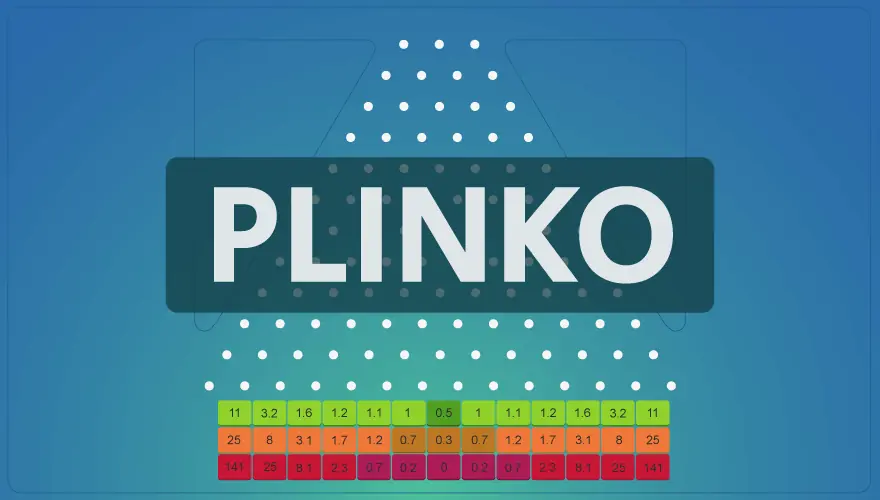
Plinko is a chance-based casino game built around a vertical board filled with pegs. A ball is released from the top and deflects as it hits each peg on the way down. By the time it reaches the bottom, it lands in one of several prize slots, each carrying a multiplier. The final multiplier determines the return on that drop.
That description sounds almost basic, but the appeal runs deeper. Plinko is visible randomness. In a slot, a random number generator decides the result and the reels present it as a visual story. In Plinko, the player watches the path unfold in front of them. Even though the outcome is still determined within a regulated random framework, the bouncing motion creates a stronger feeling of suspense. You are not just waiting for symbols to stop; you are following a moving object through a chain of tiny deflections.
This format has become noticeable for several reasons:
It is instantly readable. A new player can understand the objective without learning paylines, symbol values or feature triggers.
It produces fast emotional swings. Many drops return small amounts or nothing remarkable, but the rare high multipliers stay in the mind.
It gives the player visible control points. Stake size, risk level and sometimes board depth can be adjusted before the drop.
It feels skill-adjacent without actually being a skill game. That distinction matters. The interface can create an impression of influence, but the underlying outcome remains chance-driven.
One of the most memorable things about Plinko is that players often remember near-misses almost as clearly as actual big hits. When a ball flirts with a top multiplier and then drops into a much lower slot, the moment can feel sharper than an ordinary losing spin on a slot. That emotional sharpness is part of the game’s pull, and it is also one reason why players should approach it with a clear head. The full picture of payment methods lives in Genting Casino coupons review before depositing real money, including the less common ones.
How the Plinko mechanic actually works
At its core, Genting casino Plinko is built on repeated binary movement. Each time the ball hits a peg, it is effectively redirected to the left or right. Over many rows, those tiny directional changes create a distribution of possible landing points. In practical terms, the centre slots tend to be reached more often, while the outer edge slots are harder to hit and therefore usually carry the highest multipliers.
This is the part many players need to understand before they start. The board may look like a free-falling, chaotic path, but the payout structure is not random in the casual sense. It is shaped around probability. The less likely a landing zone is, the more aggressively it tends to pay. That is why low-value slots often sit near the centre, where outcomes cluster more often, while premium multipliers wait on the edges.
In most versions of Plinko, the player is asked to set a few key parameters before dropping the ball:
Bet size — the amount staked on each drop.
Risk level — usually low, medium or high.
Rows or board depth — in some versions, more rows create more possible paths and a wider spread of outcomes.
The risk setting is especially important because it changes the multiplier map. On lower risk, the board is usually flatter. That means more moderate outcomes and fewer extreme jumps. On higher risk, the board becomes more top-heavy at the edges, often with much larger maximum multipliers and harsher low-return zones elsewhere. The board still looks similar, but the session can feel completely different.
| Core setting | What it changes | What it means in practice |
|---|---|---|
| Bet size | The value of each drop | Higher stakes increase both exposure and emotional pressure per result |
| Risk level | The spread of multipliers across the board | Higher risk usually means rarer big hits and more severe low-return outcomes |
| Rows / depth | The number of bounce decisions on the way down | Can increase variation and alter how often edge multipliers are realistically reached |
A useful way to think about Plinko is this: the player does not control the path, but does control the shape of the volatility they are stepping into. That is a meaningful distinction. You are not choosing where the ball lands. You are choosing how forgiving or punishing the board is likely to be.
Why the game feels engaging and how its tempo works in real play
Plinko is one of the clearest examples of a game where pace is part of the product. A single drop resolves quickly, often within a couple of seconds, but it still creates a complete mini-drama. Release, bounce, hesitation, landing, multiplier. That loop is short enough to encourage repetition and vivid enough to keep attention locked in.
In a slot, tempo is often shaped by reel speed, animations, anticipation pauses and bonus triggers. In Plinko, the rhythm is cleaner. There are fewer decorative layers between stake and result. That directness is appealing, especially for players who do not want to sit through long animations or learn a paytable before they begin.
There is also a subtle psychological effect at work. Because every result is visualised as a path, the session can feel more eventful than it actually is in bankroll terms. A modest return may still look dramatic if the ball ricochets across the board before landing. That means Plinko can hold attention even during average stretches. It does not need a feature round to create suspense; the descent itself does that job.
At the same time, the speed can be deceptive. Fast resolution means a player can go through many rounds in a short session. If the stake is set too high relative to bankroll, losses can accumulate faster than the simple interface suggests. This is one of the central practical points with Genting casino Plinko: the game feels light, but the money flow can be brisk.
One observation I keep coming back to is that Plinko often feels calmer to look at than it feels to play. The board is neat. The controls are minimal. But once a player raises the risk setting and starts chasing larger multipliers, the emotional temperature rises quickly. That disconnect between visual simplicity and internal tension is one of the format’s defining traits.
How risky Plinko can be and who is likely to enjoy it
Plinko can range from relatively controlled to highly aggressive depending on how the version is configured. It is not a single fixed experience. A low-risk board with conservative stakes can behave as a lighter, more repeatable format, where many drops return small or middling multipliers. A high-risk board can produce long stretches of disappointing results interrupted by occasional large returns.
That makes the question of suitability more important than it first appears. Plinko may appeal to players who enjoy:
quick-round gambling with minimal setup;
clear visual presentation of each result;
adjusting exposure through risk settings;
the possibility of rare but striking multipliers.
It may be less suitable for players who prefer:
long-form slot sessions with features, themes and bonus rounds;
games where strategy has a stronger role;
steady entertainment value from sound design, story or progression;
a slower pace with more breathing room between outcomes.
Plinko is also not ideal for players who misread visual randomness as control. Watching the ball bounce can tempt some users into seeing patterns that are not really actionable. A series of centre landings does not mean an edge hit is due. A near-miss on a top multiplier does not make the next drop more promising. This is still a random gambling product, not a timing challenge or a prediction game.
What players should understand about probabilities and potential outcomes
The most practical thing to understand before playing Genting casino Plinko is that the board is designed around uneven probability. Most outcomes are not equally likely. The centre of the board generally captures more landings because there are more paths leading there. The outer slots are harder to reach and therefore usually tied to larger multipliers.
That means the headline maximum multiplier, while attractive, should not be treated as a realistic baseline expectation. It is better understood as the far end of the distribution. In real sessions, especially on higher-risk settings, a player may see many low-value results before a major return appears. Sometimes that return arrives quickly. Sometimes it does not arrive at all within the session.
This is where bankroll discipline matters. Because the rounds are short, players can be lulled into underestimating variance. A sequence of modest landings may feel harmless, but if those outcomes are below stake or only partially compensating for previous drops, the balance still erodes. Looking only at whether a drop “won something” can be misleading. The meaningful question is whether the multiplier produced a net-positive result relative to the stake.
Another useful point: lower risk does not mean safe in the everyday sense. It simply means the distribution is less extreme. The player may still lose over a session, and the game still relies on chance. The difference is that lower risk tends to reduce the size of the swings rather than remove them.
| Session element | Common player assumption | Better practical reading |
|---|---|---|
| High maximum multiplier | Big returns are a normal part of play | They are usually rare and should be treated as exceptional outcomes |
| Low-risk mode | The game becomes safe or predictable | Variance softens, but the result is still uncertain and bankroll still matters |
| Near-miss on an edge slot | A big hit may be close | It is visually dramatic but does not improve the next drop’s probability |
| Frequent small returns | The session is going well | Only net result over time shows whether the balance is actually holding |
A second memorable observation is that Plinko can create the illusion of “busy luck.” So much appears to happen during the bounce path that players may feel they are getting more information than they really are. In truth, the extra motion does not create extra predictability. It creates extra theatre around probability.
How Plinko differs from slots and other casino formats
The difference between Plinko and classic online slots is not just visual. It changes how the session is experienced. Slots are layered products. They usually rely on reels, symbol combinations, paylines or ways-to-win systems, and often include real money free spins, wilds, scatters and bonus features. Plinko removes almost all of that. There are no reel sets to interpret and no feature ladder to wait for. The entire proposition is concentrated into one repeated event: the drop. Mobile players should have a look at Aviator crash game guide before installing anything.
Compared with Genting Casino roulette games for real money players, Plinko shares the idea of staking on uncertain outcomes, but the presentation is more kinetic. Roulette resolves in a single spin with a fixed wheel structure. Plinko resolves through a visible descent that creates a stronger sense of journey between stake and result.
Compared with crash-style games, Plinko is less about timing and more about distribution. The player is not deciding when to cash out. Instead, they set the conditions beforehand and accept the landing result. That makes it simpler to operate but also removes the illusion of last-second agency that crash games often trade on.
Compared with table games generally, Plinko is lighter on rules and heavier on visual suspense. That accessibility is a strength, but it also means the depth comes from risk configuration rather than strategic complexity.
Slots offer layered entertainment. Plinko offers compressed suspense.
Table games reward rule knowledge. Plinko rewards discipline in stake and risk selection.
Crash games revolve around timing decisions. Plinko revolves around accepting a pre-set probability spread.
If a player wants narrative, symbols, themed presentation and occasional feature explosions, slots remain the better fit. If they want a stripped-back, high-clarity gambling loop with immediate outcomes, Plinko has a stronger case.
Practical strengths and limitations of the format
Genting casino Plinko has several genuine strengths when judged as a playable product rather than a trend item. First, it is accessible. The learning curve is minimal, and that lowers the barrier for new players. Second, it is transparent in structure. Even if the probabilities are not intuitively calculable during a live session, the board clearly shows that some landing zones are more valuable than others. Third, it gives users a tangible way to shape volatility through settings.
Those positives, however, need to be balanced against real limitations. Plinko can become repetitive for players who want variety. There are no evolving feature layers to break up the cycle. The same basic action repeats over and over. For some, that is elegant. For others, it wears thin quickly.
Another limitation is that the visual path can encourage emotional overreaction. A drop that nearly reaches a premium multiplier may feel “unlucky” in a way that pushes a player to continue, even though the next result is independent. This is not a flaw in the software as such, but it is a behavioural pressure point worth recognising.
There is also a practical issue around session speed. Because the interface is so frictionless, players can place many drops without much reflection between them. In slower games, the structure itself creates pauses. In Plinko, the player often has to create those pauses deliberately.
What to check before starting a Plinko session
Before launching Genting casino Plinko, I would focus on a short checklist rather than diving straight in. This is one of those formats where a minute of preparation can change the whole experience.
Look at the risk setting first. Do not treat it as a cosmetic option. It reshapes the session profile.
Set a stake that matches the game’s speed. A comfortable slot stake may feel too high here if results are resolving quickly.
Check whether rows or board depth can be adjusted. That setting can materially change distribution and expectation. When the support team feels slow, best Genting Casino free chips page for UK players explains the fastest ways to reach them.
Use demo mode if available. It helps you understand how different configurations feel before money is involved.
Decide what kind of session you want. Are you testing low-risk repeatability, or chasing rare large multipliers? The answer should shape the setup.
A third observation that separates Plinko from many other formats is this: players often think they are choosing excitement by raising risk, but in reality they may be choosing longer periods of flat or disappointing returns in exchange for a distant upside. That trade-off is worth making only if the player genuinely accepts the dry spells that come with it.
In practical terms, the best way to approach Plinko is to define limits before the first drop. Decide how much you are prepared to spend, how long the session should last, and whether you are playing for smooth repetition or high-variance spikes. Without those boundaries, the game’s quick loop can pull a session further than intended.
Final verdict
Genting casino Plinko offers a very specific kind of gambling experience. It is not trying to replace feature-rich slots or strategy-led table games. Its strength lies in compression: one simple action, one visible path, one immediate result. That makes it easy to enter and surprisingly intense once the stakes or risk level rise.
Directness carries this title further than decorative complexity ever could, and the design choices reinforce that priority at every turn. Volatility shaping gives players genuine agency, letting each session feel tailored rather than imposed, while the self-contained nature of every drop sustains tension without requiring lengthy build-ups. Visual readability supports quick decision-making, and the pace never drags, which suits those who prefer momentum over ornament. In most cases, titles in this category sacrifice either clarity or flexibility; here, neither is compromised, and that balance is what makes the experience dependable for repeat play.
Its weak points are just as real. The format can become repetitive, the pace can drain a balance faster than expected, and the bounce animation can make randomness feel more controllable than it is. High-risk settings, in particular, should be treated with caution. They can produce exciting headline moments, but they can also produce long stretches that feel thin and frustrating.
So, is Plinko worth trying? For players who want a stripped-back, probability-driven format with quick feedback and adjustable intensity, yes, it can be a strong fit. For those who prefer richer presentation, strategic involvement or slower session flow, another format may suit them better. The key is to see Plinko for what it really is: a simple-looking game built on sharp variance, fast decisions and a very efficient form of suspense.
FAQ
How does Plinko work in real-money play?
A ball is dropped from a chosen height and falls through the board. It bounces off pegs and lands into an outcome slot with a multiplier. The result is shown immediately after the ball stops. The total outcome impacts the balance according to the stake settings.
What does the multiplier mean when the ball lands?
The multiplier applies to the selected stake for that drop. A higher multiplier slot means a larger win relative to the same stake size. If the ball lands in a low or zero outcome zone, the result is smaller.
What rule should be checked before using the current mirror when the game is stuck?
Confirm that the correct game type is selected and that demo or real-money mode matches the desired session. Then reload the game through the working mirror. If the issue persists, account relaunch and a fresh browser session can help.
How does the interface handle mobile play on a phone browser?
The controls scale to smaller screens so the ball drop and stake settings remain usable. Sound and animation settings may affect smoothness on some devices. For best results, stable internet and a modern browser are recommended.
What happens to winnings and the balance after each Plinko round?
The game updates the displayed result immediately after the ball lands. Winnings, if any, are reflected in the balance associated with the current mode. If a balance delay occurs, waiting a moment or reloading the game often helps.
How do account and security checks affect access to real-money Plinko?
Real-money play requires an active account session, and in some cases verification may be requested before certain actions. The site may also limit game actions until security checks are complete. Signing in again and ensuring account details match the verification status can clear common access issues.
What should players review about limits or staking caps before the first drop?
Plinko may follow session limits, including minimum and maximum stake rules. These limits can depend on the account status and game settings. Checking the available stake range before starting helps avoid failed drops or disabled controls.
What is a common beginner mistake in Plinko, and how can it be avoided?
A frequent mistake is launching the next ball without rechecking the stake after changing it. Another issue is selecting demo mode by accident and expecting real-money balance changes. Confirm the current mode, stake amount, and that the start button is active before dropping the ball.